


 Cart
Cart
 sales@molnova.com



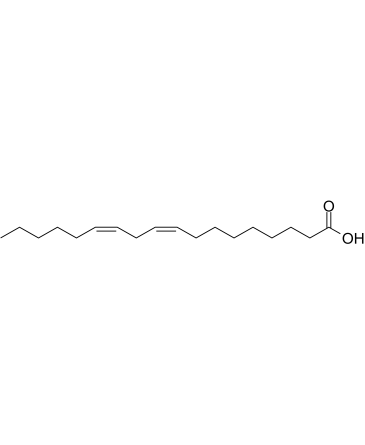
Linoleic acid
CAS No. 60-33-3
Linoleic acid( Linoleic acid )
Catalog No. M18876 CAS No. 60-33-3
Essential fatty acid. Prostaglandin precursor.
Purity : >98% (HPLC)
 COA
Datasheet
HNMR
HPLC
MSDS
Handing Instructions
COA
Datasheet
HNMR
HPLC
MSDS
Handing Instructions
| Size | Price / USD | Stock | Quantity |
| 1G | 43 | In Stock |


|
Biological Information
-
Product NameLinoleic acid
-
NoteResearch use only, not for human use.
-
Brief DescriptionEssential fatty acid. Prostaglandin precursor.
-
DescriptionLinoleic acid is a doubly unsaturated fatty acid, occurring widely in plant glycosides. It is an essential fatty acid in mammalian nutrition and is used in the biosynthesis of prostaglandins and cell membranes.
-
In Vitro——
-
In Vivo——
-
SynonymsLinoleic acid
-
PathwayOthers
-
TargetOther Targets
-
RecptorOthers
-
Research AreaOthers-Field
-
Indication——
Chemical Information
-
CAS Number60-33-3
-
Formula Weight280.45
-
Molecular FormulaC18H32O2
-
Purity>98% (HPLC)
-
SolubilityDMSO : ≥ 43.33 mg/mL; 154.50 mM
-
SMILESCCCCCC=CCC=CCCCCCCCC(=O)O
-
Chemical Name9,12-Octadecadienoic acid (9Z,12Z)-
Shipping & Storage Information
-
Storage(-20℃)
-
ShippingWith Ice Pack
-
Stability≥ 2 years
Reference
molnova catalog



related products
-
Ethyl 4-methoxycinna...
Ethyl 4-methoxycinnamate is a glutathion S tranferase inhibitor.
-
Propyl dodecanoate
Propyl dodecanoate (Propyl laurate) is often added to skin care products to improve the touch of the product and increase the stability of the product.
-
P110
Dynamin-related protein 1 (Drp1) inhibitor, inhibits Drp1 GTPase activity. Displays no effect on dynamin 1 or other mitochondrial dynamics-related proteins. Inhibits mitochondrial fission, dysfunction and reactive oxygen species (ROS) production in vitro. Reduces programmed cell death and improves cell viability by protecting mitochondrial integrity. Reduces mitochondrial fragmentation and mitochondrial ROS production in mouse model of Parkinson's disease. Cell permeable.
